

Beneficial Ownership in Serbia: AML/CFT Context and New Amendments to the Law on the Central Register of Beneficial Owners

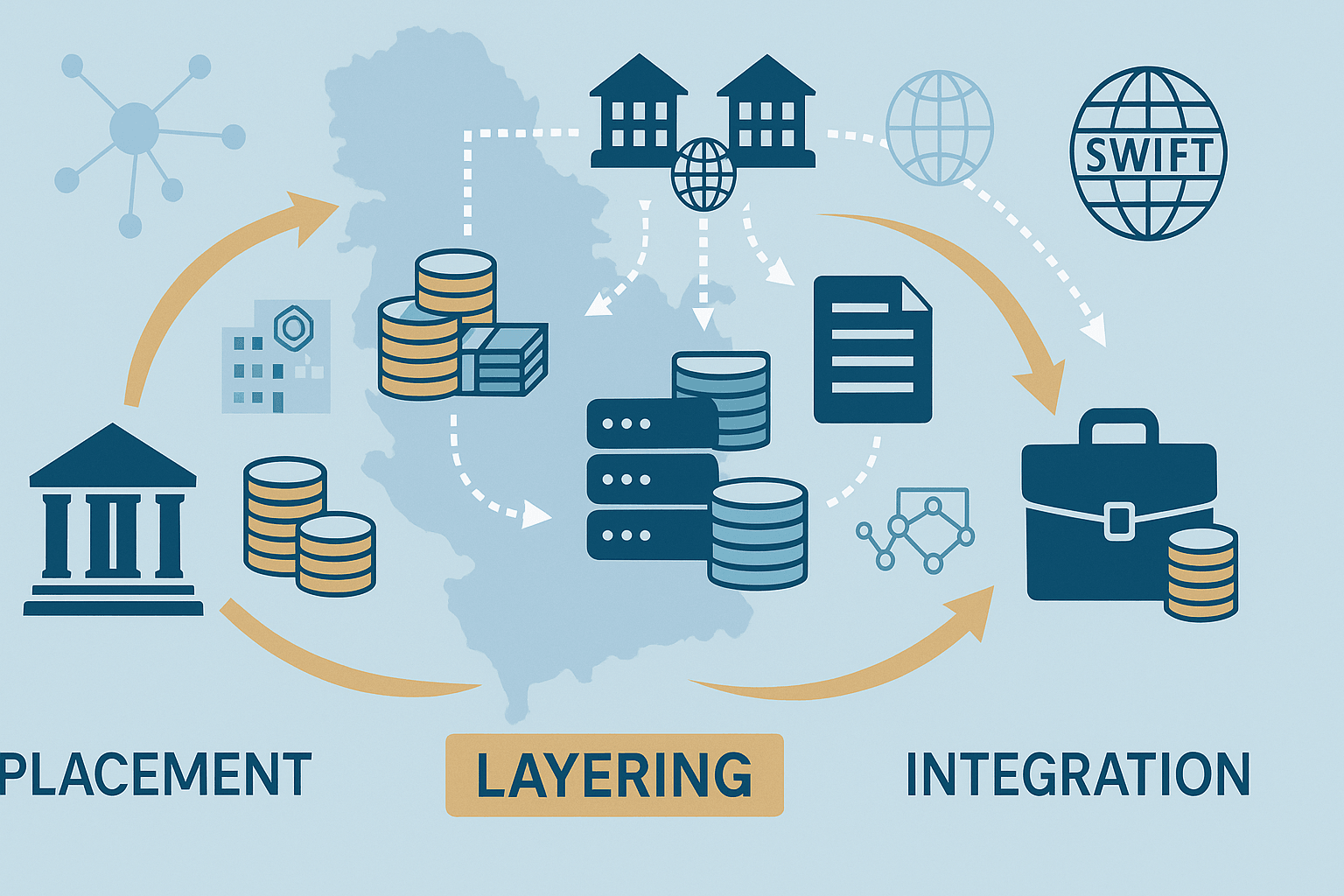
Before we turn to the operational obligations under the Law on the Central Register of Beneficial Owners, it is appropriate at this point to clarify the ratio legis—that is, the purpose and rationale—of the legal regime governing the institute of the beneficial owner. The institute of the beneficial owner is a response to a key structural problem in the anti-money laundering and counter-terrorist financing (AML/CFT) system, namely the economic anonymity enabled by layered corporate structures (multiple tiers of companies, fiduciary arrangements for entrusting assets to be managed for the benefit of a third party, chain ownership across several jurisdictions, and the like). That anonymity underpins the layering phase in the classic money-laundering cycle and also functions as a tool for corruption, tax evasion, sanctions evasion, and terrorist financing. For that reason, an obligation has been established to identify (and register) the beneficial owner of a given legal entity, thereby shifting the emphasis from formal to substantive control. Instead of relying solely on recorded/registered owners, the Law requires determination of the specific natural person who ultimately derives benefit from the business or exercises decisive influence over decision-making. In other words, the focus of interest is no longer the nominal owner or the person who appears in documents, but the one who effectively manages, directs, or enjoys the results of the business. This approach prevents the misuse of indirect, layered, and fiduciary arrangements to conceal actual control, ensures greater transparency of the ownership structure, and enables AML/CFT measures to be applied in accordance with the real—and not merely formal—state of affairs. In doing so, it corrects the information asymmetry between obliged entities applying know-your-customer measures—primarily banks, and then lawyers, accountants, auditors, and others—and the client. The essence is that a centralized and reliable dataset of ultimate beneficial owners (UBO) provides obliged entities with trustworthy information on which to apply risk-based measures. Such a dataset enables more precise risk stratification (application of simplified or enhanced due diligence—SDD/EDD), as well as screening for PEP status and international sanctions. At the same time, standardized documentation reduces the number of false positives, accelerates processing, and lowers compliance costs.
In addition, the availability of accurate and up-to-date UBO data accelerates financial intelligence work and asset tracing by financial intelligence units (FIUs) and public prosecutors, because the authorities can more quickly identify the persons who truly control the entities and the assets. At the same time, reputational and legal risk increases for those attempting concealment, since it becomes easier to prove who stands behind formal structures. Accordingly, modern standards—primarily FATF Recommendations 24/25 and the EU AML framework—insist not only on the initial identification of the beneficial owner, but also on the accuracy, timeliness, and verifiability of the data, with appropriate documentary substantiation even where control is below a quantitative threshold (for example, where there is a preponderant influence without a holding of at least 25%). In this sense, the Serbian Law and the established central register are not a mere administrative formality, but a transparency infrastructure without which a risk-based AML/CFT regime cannot function effectively. Hence the strict deadlines, clearly prescribed documentation standards, and sanctioning mechanisms that accompany this obligation.
Under the current Law on the Central Register of Beneficial Owners (hereinafter referred to as the “Law”), registered entities are obliged to align with the provisions of the Law within 60 days from the date of commencement of its application. Since the Law began to apply on 1 October 2025, registered entities are obliged to comply with the provisions of the Law by the end of November of this year. The most significant practical consequence of the foregoing lies in the obligation of registered entities to record beneficial ownership data in the Central Register within the stated period and, simultaneously with such recording, to upload the documents on the basis of which the beneficial owner has been determined. For the purposes of the Law, “registered entities” are considered to be: companies, except public joint-stock companies; cooperatives; branches of foreign companies; business and other associations, except chambers of commerce and representative offices of foreign chambers of commerce, political parties, trade unions, sports organisations and associations, churches and religious communities; foundations and endowments; institutions; representative offices of foreign companies, associations, foundations and endowments. The provisions of the Law also apply to trusts administered from the Republic of Serbia, or whose administration is not located in the Republic of Serbia if the trustee, on behalf of the trust, enters into a business, professional or commercial relationship, or carries out transactions or cash transactions with legal or natural persons in the territory of the Republic of Serbia; as well as to legal arrangements similar to a trust administered from the Republic of Serbia, or whose administration is not located in the Republic of Serbia, if the person comparable to a trustee enters into a business, professional or commercial relationship, or carries out transactions or cash transactions with legal or natural persons in the territory of the Republic of Serbia.
I. Who is considered a beneficial owner?
Pursuant to the provisions of the Law, a beneficial owner is:
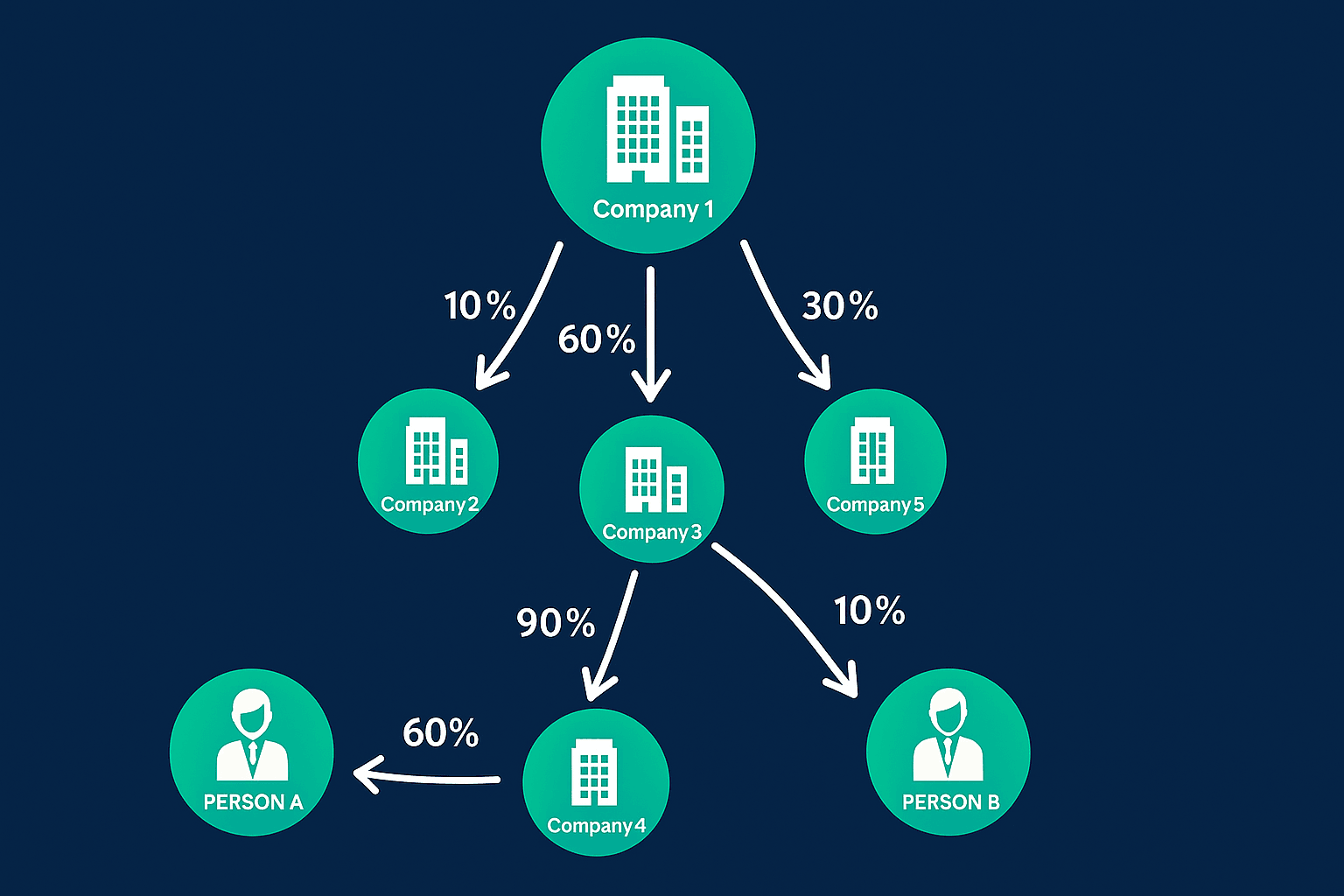
- a natural person who, directly or indirectly, holds 25% or more of the shares or equity interests in the registered entity’s capital, or 25% or more of the voting rights, on the basis of which he or she participates in the management of the registered entity;
- a natural person who, directly or indirectly, has a preponderant influence over the conduct of business and decision-making;
- a natural person who, indirectly, provides or ensures funds to the registered entity and, on that basis, materially influences the decision-making of the registered entity’s governing bodies when deciding on financing and operations;
- a natural person who is the settlor, trustee, protector, or beneficiary of a trust, if designated, and if the beneficiary is not designated, the class of persons in whose interest the trust is established, as well as any person who has a dominant position in the management of the trust or in a trust-like legal arrangement;
- a natural person who is the founder or beneficiary of a foundation or endowment, if designated, and if the beneficiary is not designated, the class of persons in whose interest the foundation or endowment is established, as well as the members of the governing bodies of the foundation or endowment.
By way of exception, if for companies, except public joint-stock companies; cooperatives; branches of foreign companies; business and other associations, except chambers of commerce and representative offices of foreign chambers of commerce, political parties, trade unions, sports organisations and associations, churches and religious communities; institutions; representative offices of foreign companies, associations, foundations and endowments, it is not possible to determine a natural person from the first three indents of the preceding paragraph in the manner prescribed by the Law, and where all reasonable actions and measures have been undertaken to determine the beneficial owner but no beneficial owner has been identified, the beneficial owner of the registered entity shall be the natural person who is registered for representation, or who is registered as a member of that entity’s governing body. In international practice this constitutes the so-called “fallback” clause, i.e., a subsidiary mechanism for determining the beneficial owner in situations where it is not possible to identify any natural person who satisfies the primary criteria of ownership or control. Every natural person who meets the above conditions is recorded in the Central Register.
Preponderant influence over the conduct of business and decision-making
With a view to facilitating the application of the statutory rules, the Ministry of Economy has published the Guidance for Recording the Beneficial Owner of a Registered Entity in the Central Register (hereinafter referred to as: “Guidance”). Among other points, the Guidance explains that “preponderant influence over the conduct of business and decision-making” of a company means a natural person’s preponderant influence over decisions concerning the registered entity’s financial and business policy, such as: adoption or amendment of the company’s business plan; change of activity, legal form, and mode of operation of the company; additional indebtedness by way of loans and credits; adoption of decisions on dividends or other profit distributions. It further states that a natural person is deemed to have a preponderant influence if he or she has the right to appoint the majority of directors or members of the supervisory board; as well as where he or she is significantly involved in the management and steering of the company’s business policy. In addition, the Guidance states that preponderant influence also includes joint action whereby two or more natural persons, on the basis of a mutual agreement, exercise voting rights in the registered entity or undertake other actions for the purpose of exerting joint influence over the management or operations of that registered entity.
II. Who records the data and in what manner?
In addition to the data on the registered entity that are entered in the Central Register by the Registrar (business name; registered seat address; registration number assigned by the Statistical Office of the Republic of Serbia; tax identification number (PIB), and the like), a portion of the data must be recorded by the authorised person, namely the following data on the beneficial owner:
- for a domestic natural person – personal name, Unique Master Citizen Number (JMBG), date of birth, place and country of birth, as well as country of residence;
- for a foreigner – personal name, passport number or foreigner’s identity card number and the issuing country and/or a foreigner identification number, date of birth, place and country of birth, country of residence and nationality;
- for refugees or displaced persons – personal name, refugee identification document number, date of birth, place of birth, country of birth and country of stay;
- the basis for acquiring the status of beneficial owner of the registered entity, the date on which the status of beneficial owner was acquired, as well as the date of recording of the data and documents.
An authorised person is deemed to be:
- the founder in the process of incorporating the registered entity by electronic means;
- the person authorised to represent the registered entity in all other cases;
- the trustee of a trust, or in the case of a trust-like legal arrangement, the person comparable to the trustee.
The authorised person records the data via the website (portal) of the Business Registers Agency. The necessary technical requirements for carrying out this activity are:
- an account in the Business Registers Agency system (REID) or on the eID.gov.rs portal;
- a qualified electronic certificate (electronic signature) issued by a certification authority in the Republic of Serbia;
- an installed electronic smart-card reader;
- the NEXU application installed for electronic signing.
Documents are scanned and uploaded to the Central Register in PDF format. If the documents are in a foreign language, or are foreign documents, they must be translated and certified by a sworn court interpreter (and in some cases an apostille must be obtained).
III. Required documentation
As previously stated, simultaneously with recording the data on the beneficial owner it is necessary to upload the documents on the basis of which that person has been determined. The grounds for recording prescribed by the Law are:
- the registration of the registered entity in the competent register;
- a change in the ownership structure and the members of the governing bodies of the registered entity, as well as other changes on the basis of which the fulfilment of the conditions for acquiring the status of beneficial owner of the registered entity may be assessed;
- the management from the Republic of Serbia of a trust or a trust-like legal arrangement, or the trustee of a trust, or the person comparable to a trustee in a trust-like legal arrangement, entering on behalf of the trust or the trust-like legal arrangement into a business, professional or commercial relationship, or carrying out transactions under Article 2 of the Law.
The Guidance sets out examples of relevant documents by which the beneficial owner is determined, according to the various grounds for recording. Thus, for example, where the beneficial owner is a natural person who directly or indirectly holds 25% or more of the shares or equity in the registered entity’s capital, or 25% or more of the voting rights on the basis of which he or she participates in the management of the registered entity, this may be evidenced by an extract from the competent register; and if it is not possible to obtain all the data on the beneficial owner from the official public register, i.e., from the register maintained by the competent authority of the state of the foreign person’s seat, the registered entity may obtain such data from the original document or a certified copy of the document, or other business documentation, provided to it by the representative or attorney-in-fact of that foreign person (members’ agreement, articles of association, and the like).
If, however, the beneficial owner is a natural person who directly or indirectly has a preponderant influence over the conduct of business and decision-making, a relevant document may be a members’ agreement, articles of association, and the like. If the beneficial owner is a natural person who indirectly provides or secures funds to the registered entity and, on that basis, materially influences the decision-making of the registered entity’s governing bodies when deciding on financing and operations, this may be evidenced by bank statements, a concluded fiduciary legal transaction (fiduciary arrangement) agreement, and the like. The Guidance further states that the ground for recording may be documents under public or private law, and it is recommended that the documentation should not be older than six months from the date of uploading to the Central Register. In addition to the documents on the basis of which the beneficial owner has been determined, it is necessary to upload a copy of the passport or foreign identity card where a foreigner is recorded as a beneficial owner. It is additionally worth noting that the Rulebook on the Content of the Central Register for the Purpose of Recording Beneficial Owners (“Official Gazette of RS”, No. 83/2025) has been adopted, which prescribes the designations and sub-designations of the grounds for acquiring the status of beneficial owner that authorised persons must use when recording data on the beneficial owner.
IV. Additional Notes and Conclusion
It is also important to note the obligation imposed by Article 9 of the Law on registered entities, i.e., on authorised persons—to verify the accuracy and up-to-dateness of the recorded data on the beneficial owner within one year from the date of the last recording of data on the beneficial owner, or from the date of the last confirmation of the accuracy and up-to-dateness of the recorded data on the beneficial owner, and within a further period of 30 days to confirm the accuracy and up-to-dateness of the recorded data on the beneficial owner. Article 18 of the Law provides for criminal liability by prescribing that a person shall be punished by imprisonment from six months to five years if, with the intent to conceal the beneficial owner of a registered entity, a trust or a trust-like legal arrangement, he or she fails to record data on the beneficial owner in the Central Register, records false data on the beneficial owner as true, or alters or deletes true data on the beneficial owner of the registered entity, trust or trust-like legal arrangement.
Additionally, the Law prescribes misdemeanour liability for registered entities as well as for responsible persons within a registered entity, accompanied by high pecuniary fines, for example where a registered entity fails to record data on the beneficial owner of the registered entity and, simultaneously with such recording, to upload the documents on the basis of which the beneficial owner of the registered entity has been determined, no later than within 30 days from the date on which the ground for recording arose; where it fails to record accurate data on the beneficial owner in the Central Register; where it fails, within the prescribed period, to confirm in the Central Register the accuracy and up-to-dateness of the recorded data on the beneficial owner; and the like. For a misdemeanour committed, a protective measure may be imposed on the registered entity consisting of a prohibition on performing certain activities, and on the responsible person within the registered entity a prohibition on performing certain functions in the legal person, for a period of six months to three years, calculated from the date on which the judgment becomes final.
In conclusion, the institute of the beneficial owner and the central register should be viewed as an infrastructural element of the anti-money-laundering system, not as “one more piece of paper”. For simple corporate structures (e.g., a single-member LLC/DOO), alignment is predominantly technical-administrative and largely unproblematic. The challenges arise with foreign investments featuring complex ownership chains—particularly where publicly listed companies appear in the chain, multi-layer holdings from different jurisdictions, and fiduciary (trust-like) arrangements—where a deeper evidentiary trail, consistent documentation, and careful interpretation of preponderant influence below quantitative thresholds are required. Even so, such entities are not unprepared in practice: banks in Serbia have for years applied stricter standards for evidencing UBO status and require robust documentation (register extracts, articles of association, members’ agreements, listing certificates, control statements, etc.), so the expected standard of proof has largely been internalised within their compliance processes. In such an environment, timely mapping of the ownership chain, collection of reliable instruments, and periodic review of data most effectively guard against regulatory, reputational, and operational risk.
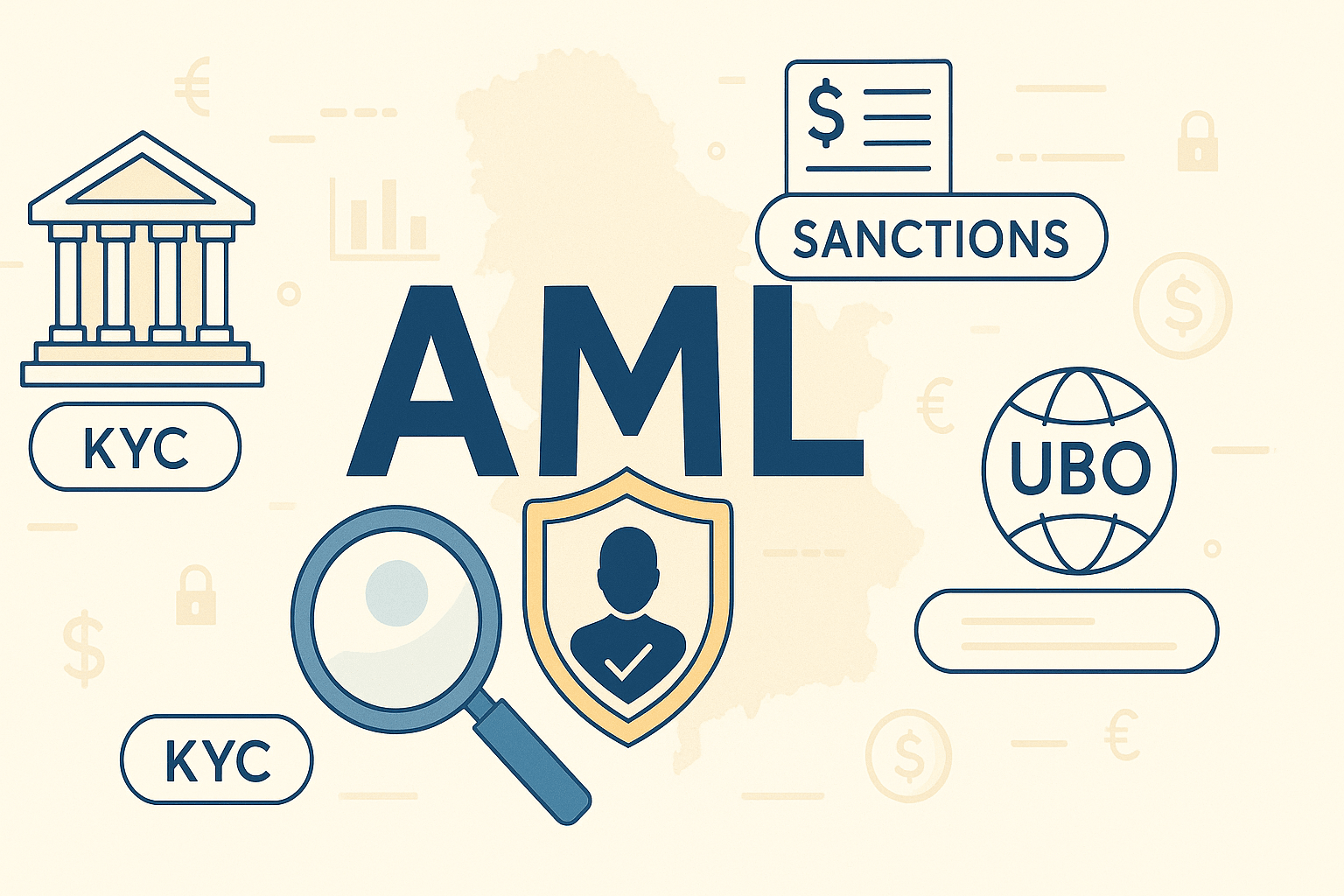
Although the recent legislative amendments may not have resolved certain issues in the most technically elegant way and have left many matters open—causing headaches for us and our clients in practice—we consider the overall direction to be sound and necessary. A higher level of transparency reduces information asymmetries and country risk, which lowers the cost of capital and facilitates access to banks and investors; it speeds up KYC and legal checks (client onboarding, M&A due diligence) thanks to standardised, centralised data; it curbs unfair competition and corruption, thereby building a fair market; and it aligns Serbia with FATF/EU standards, increasing predictability and attractiveness for cross-border investment.
Author: Kristijan Karan, Attorney-at-Law in Novi Sad, Serbia
Published: 3. November 2025