




Kristijan Karan Elected Chairman of the Statutory Commission of the Serbian Tax Advisers Association
At the 14th regular session of the Assembly of the Serbian Tax Advisers Association (UPSS), held on 28 November 2025 as part of the “7th Tax Days” event at the IN Hotel in Belgrade, Attorney-at-Law Kristijan Karan was elected Chairman of the UPSS Statutory Commission. As Chairman of the Statutory Commission, Kristijan Karan will head the UPSS body responsible for overseeing the application of the Statute and other general acts of UPSS, interpreting their provisions and issuing opinions on matters relevant to the constitutionality, lawfulness and internal consistency of UPSS acts. The Statutory Commission, which he now chairs, in particular monitors the implementation of the Statute and other general acts and proposes their amendments and supplements, issues authentic interpretations of the Statute and other general acts of UPSS at the request of the Assembly, the Management Board or the President of UPSS, gives opinions on the compliance of UPSS general acts with the law, the Statute and other acts, considers members’ initiatives to amend the Statute and other acts and submits corresponding proposals to the Management Board or the Assembly, takes part in the drafting of amendments and supplements to the Statute, examines issues relating to the statutory position of members, bodies and working bodies of UPSS, as well as the interpretation of provisions concerning members’ rights and obligations, decides on requests for the exclusion of a member, determines whether the conditions for obtaining a licence have been met and informs the competent UPSS body of its conclusions and, where necessary, issues opinions on internal control procedures or on conflicts of jurisdiction between UPSS bodies where such issues are of statutory relevance.
This year’s “7th Tax Days” brought together experts in taxation, finance and law, with a focus on the most significant recent developments in tax regulation and their impact on the economy. Particular attention was devoted to the latest amendments to the VAT Act, the Electronic Invoicing Act and the Electronic Waybills Act, including new rules on the person liable for VAT, the time of supply of goods, the issuance of documents relating to reductions and corrections of the tax base, as well as the conditions for exercising the right to deduct input VAT. In this context, the obligations of domestic taxable persons regarding VAT identification within the European Union, in both B2B and B2C transactions, VAT registration in the Member States, as well as the practical application of the VIES, OSS and related mechanisms were also examined.
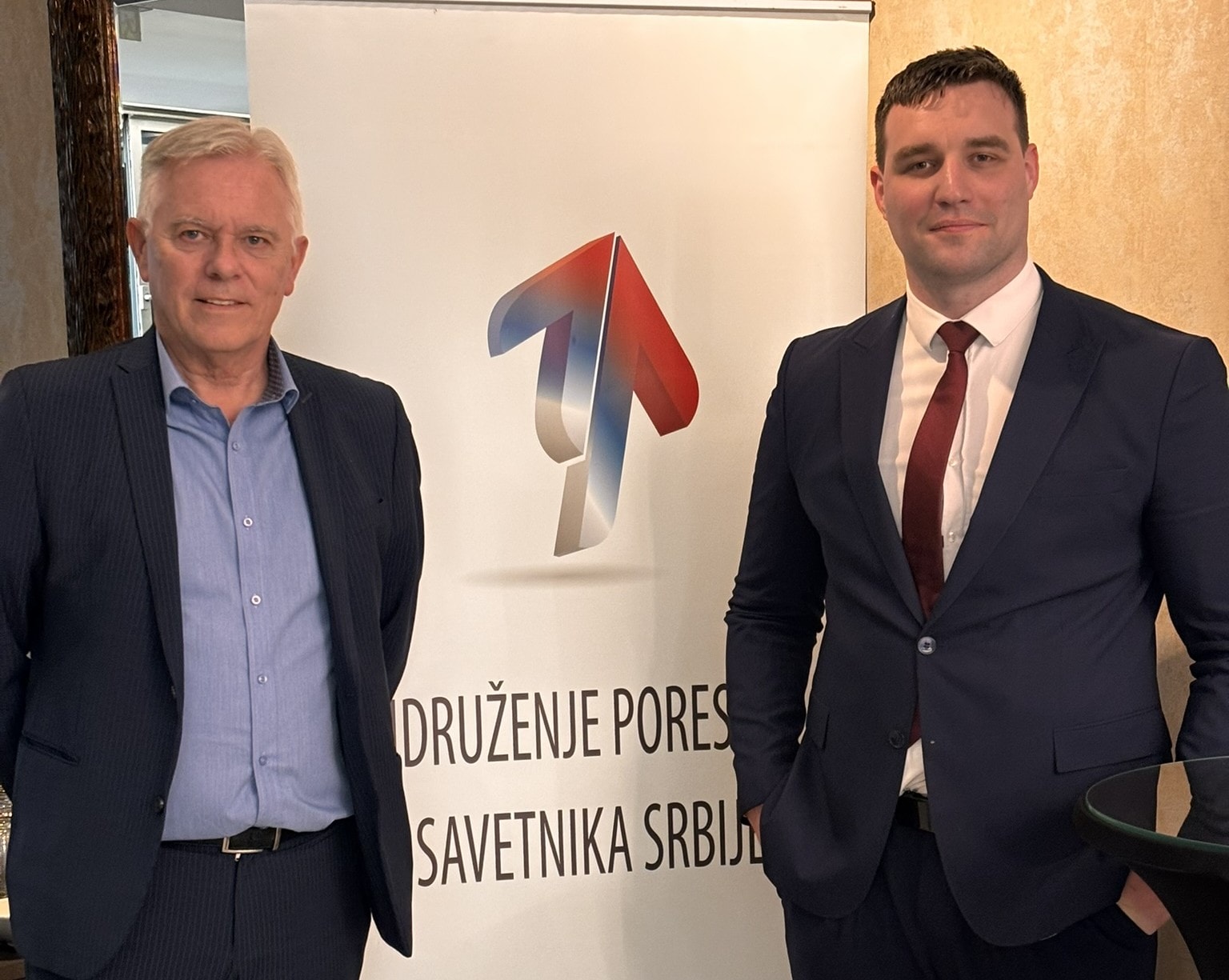
Mr Đerđ Pap (member of the Management Board of UPSS) and Mr Kristijan Karan.
A substantial part of the programme was devoted to European and international tax trends: the reform of the DAC framework (Directive on Administrative Cooperation in the field of taxation), the introduction of the global minimum tax under the Pillar Two rules (QDMTT, IIR, UTPR) and the risks of fragmentation of tax systems, as well as the role of CFE Tax Advisers Europe in the dialogue with EU institutions, the OECD and the UN. In addition, practical issues concerning the electronic recording of VAT – individual and aggregate records, electronic records of input VAT and deadlines for posting in the electronic invoicing system – were addressed, with a particular focus on taxpayers within the VAT system, public sector entities and voluntary users of the Serbian e-Invoicing System (SEF).
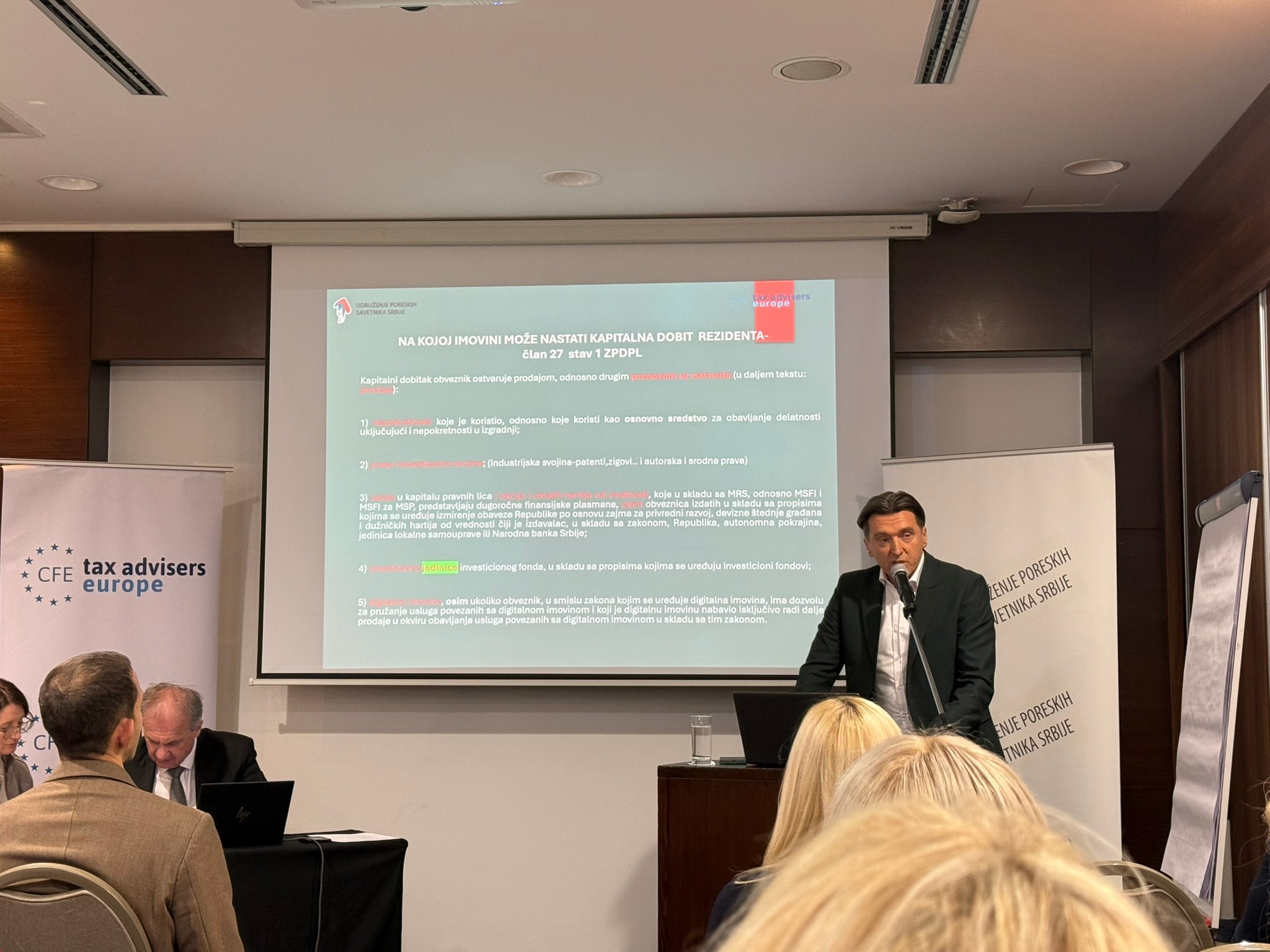
On the second day of the conference, the legal and organisational implications of converting public enterprises into capital companies (limited liability companies – DOO and joint-stock companies – AD) were analysed, including the preparation and amendment of founding acts and other incorporation documents, the adoption of company statutes, the appointment of corporate bodies, and the specific challenges of managing public assets within the new legal framework. Particular attention was devoted to the application of the new Law on the Central Register of Beneficial Owners and the accompanying secondary legislation, with a focus on the entities required to register, the criteria for determining the beneficial owner, the registration procedure in the Central Register of Beneficial Owners (CESV), as well as its interaction with the regulations on the prevention of money laundering and terrorist financing. In the closing part of the programme, the taxation of capital gains of natural persons and legal entities was addressed – the conceptual definition of capital gain and loss, exemptions from taxation, the determination of the sale and acquisition price, the specificities of transfers of real estate, shares/participation interests and securities, as well as the treatment of capital gains realised by non-resident taxpayers.
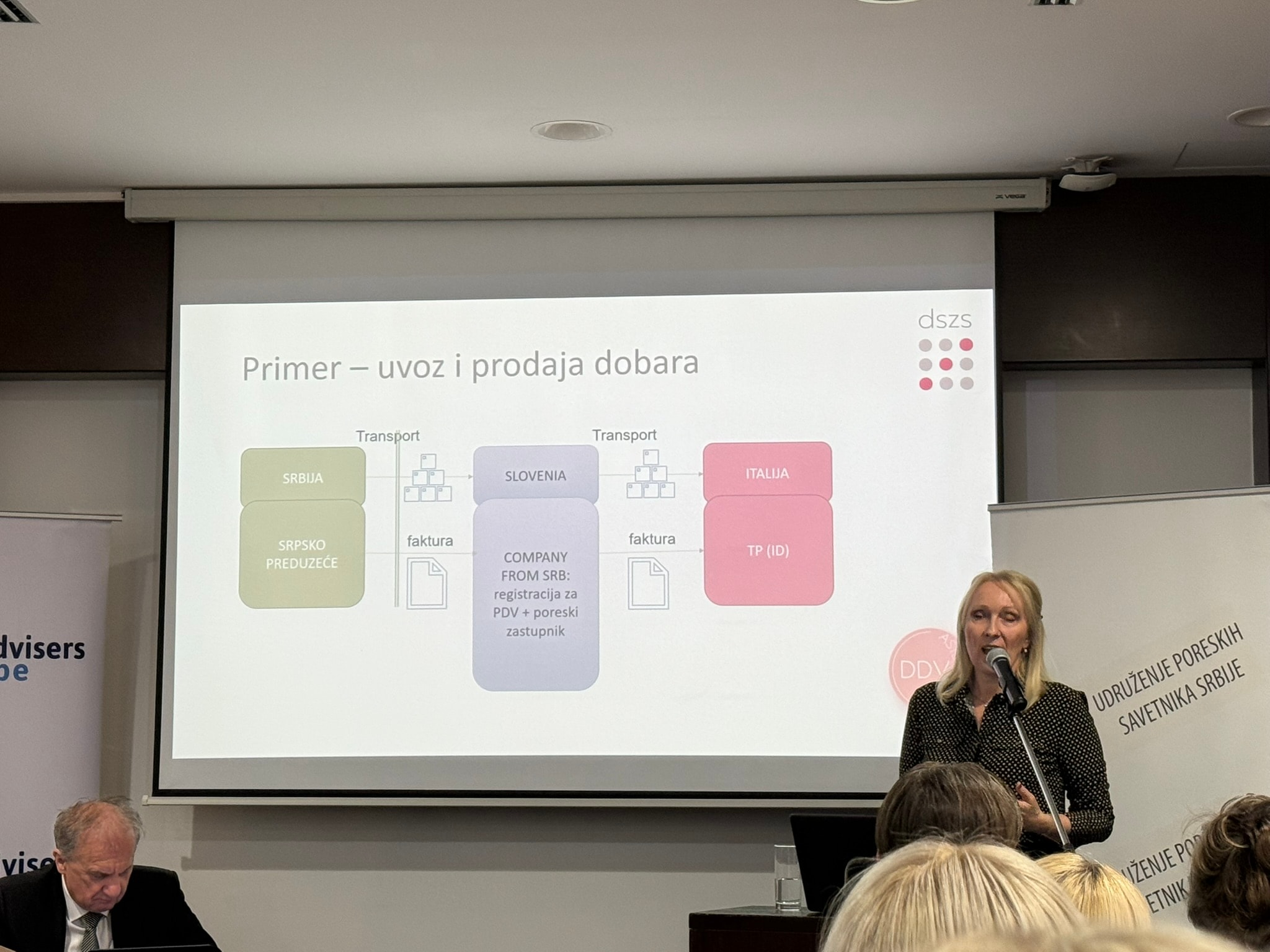
The programme featured presentations by a number of experts: Mag. Aleksandra Heinzer spoke on VAT identification within the European Union, Mr Aleksandar Vasić presented current issues relating to VAT and the Serbian e-Invoicing System (SEF), while Mr Predrag Petrović addressed VAT records, with a particular focus on aggregate (summary) records. Nataša Dobrosavljević highlighted the activities and recent developments in the work of CFE Tax Advisers Europe, and Mag. Slavica Plazinić focused on the key aspects of the application of the new Law on Beneficial Owners. MSc Zoran Janković examined the taxation of capital gains of legal entities, while Mr Vladimir Stefanovski dealt with the taxation of capital gains of natural persons, and Prof. Dr Zlatko Stefanović spoke about the change of legal form of public enterprises. Mr Milan Josimov, a representative of the Office for Information Technologies and eGovernment, presented the practical aspects of electronic signatures and digital documents.
Author: Law Office of Kristijan Karan
Published on: 26. December 2025
Latest News & Publications

Publication
Serbia–Estonia Double Taxation Agreement (DTA) on Income Taxes

Publication
Beneficial Ownership in Serbia: AML/CFT Context and New Amendments to the Law on the Central Register of Beneficial Owners

Publication

