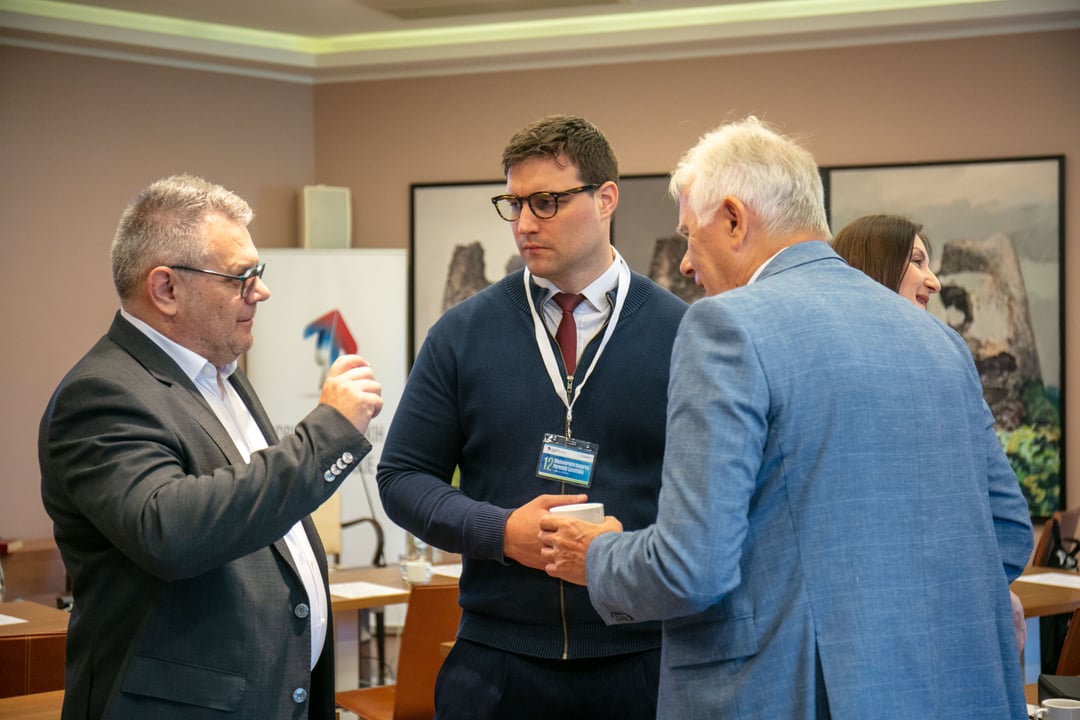


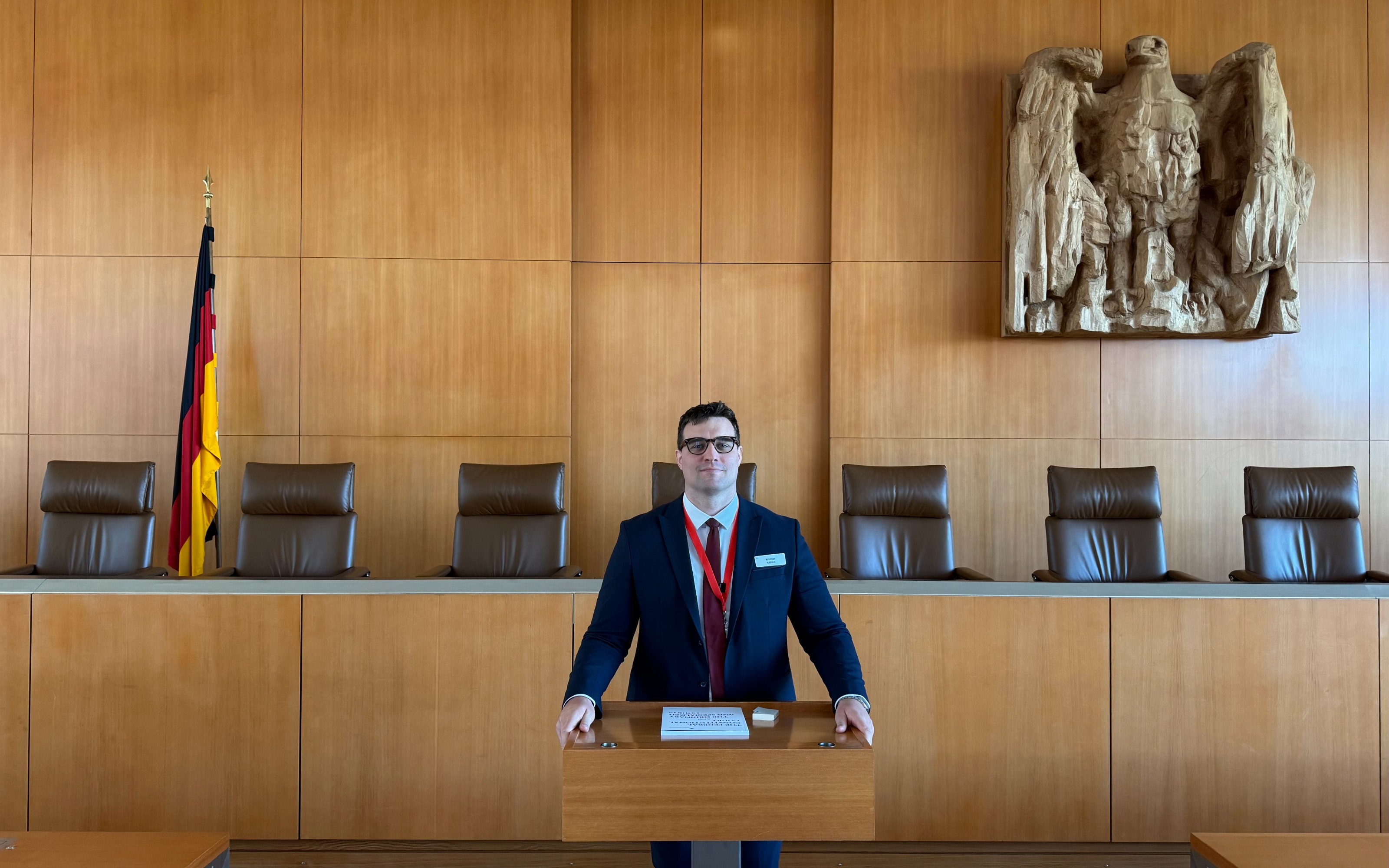
On 15 September 2026, as part of a programme organised by theFriends of ERA Association,which supports theAcademy of European Law (ERA),I had the honour of visiting Germany’s Federal Constitutional Court (Bundesverfassungsgericht - BVerfG) and Federal Court of Justice (Bundesgerichtshof - BGH) in Karlsruhe. The visit provided a valuable opportunity to gain first-hand insight into the work of two of the most important institutions of the German judiciary, their institutional culture and the professional experiences of legal practitioners who have worked within their institutional environment for decades.
A particular highlight of the visit to the Federal Constitutional Court was the meeting and open exchange with Professor Dr Christine Langenfeld, a Justice of the Court. Professor Dr Langenfeld gave us a rare, first-hand insight into her working day and the functioning of an institution that occupies a central place in the German legal order. What was originally planned as a brief meeting developed into an approximately ninety-minute, substantive and lively discussion about the work of the Court and numerous current legal issues.
The substantive legal part of the discussion with Professor Dr Christine Langenfeld merits particular mention. We focused especially on the Federal Constitutional Court’s dual role - as a court and as an autonomous and independent constitutional organ of the Federal Republic of Germany - and on its place within the system of separation of powers. Under the Basic Law, fundamental rights bind the legislature, the executive and the judiciary as directly applicable law, while judicial power is entrusted to the Federal Constitutional Court, the federal courts and the courts of the Länder (Art. 1(3) and Art. 92 of the Basic Law). The Court thus safeguards the objective constitutional order while also providing individual protection to anyone claiming that public authority has violated one of their fundamental rights or rights equivalent to fundamental rights (Art. 93(1) and Art. 94(1) no. 4a of the Basic Law; § 90(1) of the Federal Constitutional Court Act).
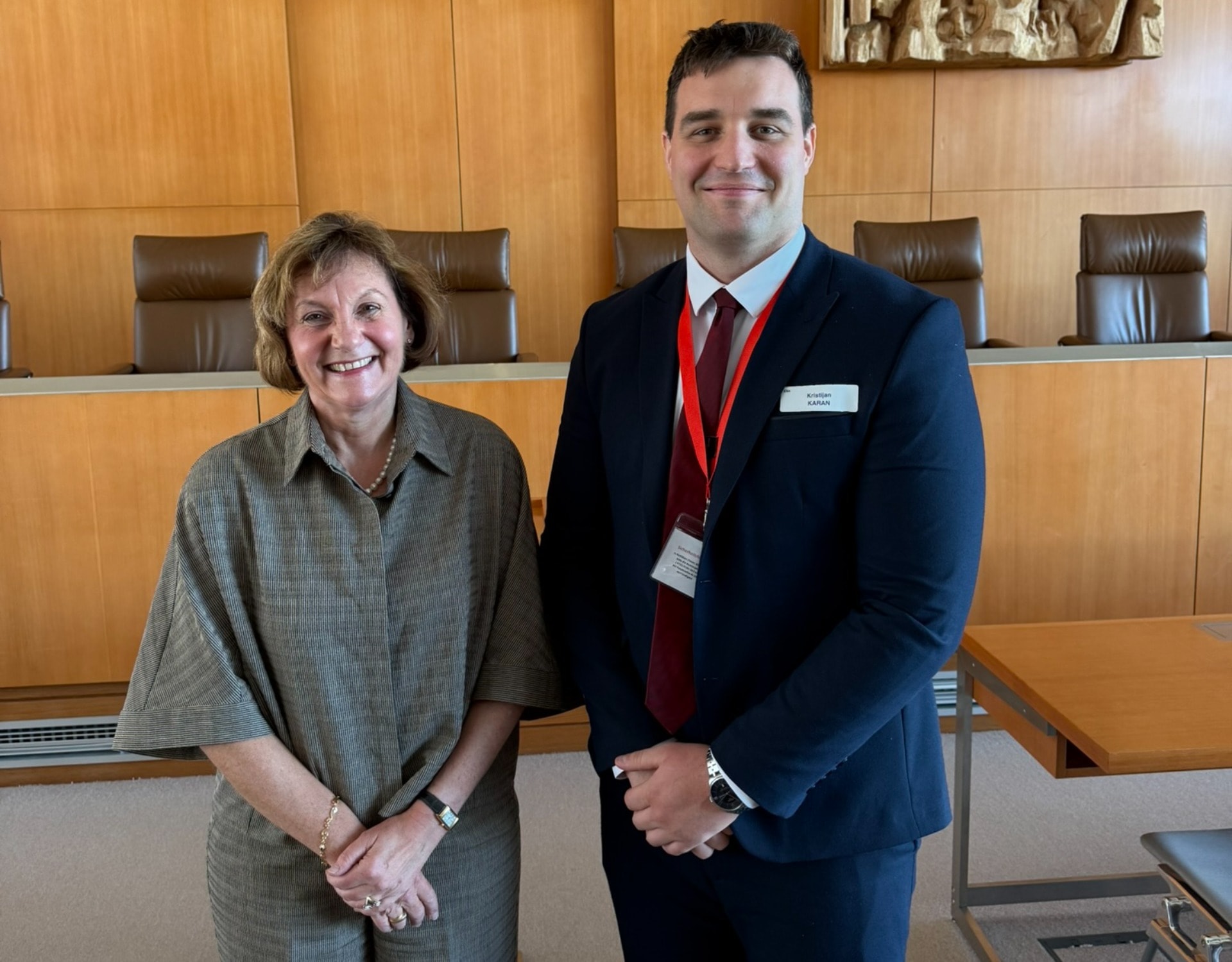
Professor Dr Christine Langenfeld, Justice of Germany’s Federal Constitutional Court, and Kristijan Karan, Attorney at Law in Novi Sad, in the courtroom of the Federal Constitutional Court in Karlsruhe.
One of the most engaging parts of the discussion concerned constitutional complaints and the precise boundary between the jurisdiction of the Federal Constitutional Court and that of the ordinary and specialised courts. The Federal Constitutional Court is not an additional court of appeal that re-examines every question of statutory interpretation and application; its review is directed at whether there has been a specific violation of constitutional law. As a rule, a constitutional complaint may be lodged only after all available legal remedies have been exhausted, and it is subject to a special admission procedure (Art. 93(5) of the Basic Law; § 90(2) and § 93a of the Federal Constitutional Court Act). This division of responsibility means that the protection of fundamental rights is first and foremost the task of all courts, while the Federal Constitutional Court ensures final constitutional review.
We also discussed the Court’s internal structure and decision-making process, as well as the importance of institutional dialogue. The Court comprises two Senates, each composed of eight Justices. Half of the Justices in each Senate are elected by the Bundestag and half by the Bundesrat, in each case by a two-thirds majority. A Justice’s term of office is twelve years, ending no later than at the end of the month in which the Justice reaches the age of 68; re-election is not permitted. Each Senate establishes Chambers composed of three Justices (Art. 93(2) and (3) of the Basic Law; §§ 2, 4, 6(1), 7 and 15a of the Federal Constitutional Court Act). Exchanges with the supreme federal courts, the Court of Justice of the European Union, the European Court of Human Rights and the constitutional courts of other countries demonstrate how the protection of constitutional rights continues to develop through dialogue between different legal orders. It was precisely this combination of firmly established institutional independence and openness to legal dialogue that left a particularly strong impression.
I am deeply grateful to Professor Dr Christine Langenfeld for the time she devoted to us, her openness and approachability, and her willingness to share her knowledge and experience with us. Meeting her confirmed once again that true professional excellence can go hand in hand with unpretentiousness, professional humility and genuine openness to dialogue. Her expertise, strong presence and the manner in which she led the discussion made this meeting one of the most valuable parts of the entire programme.
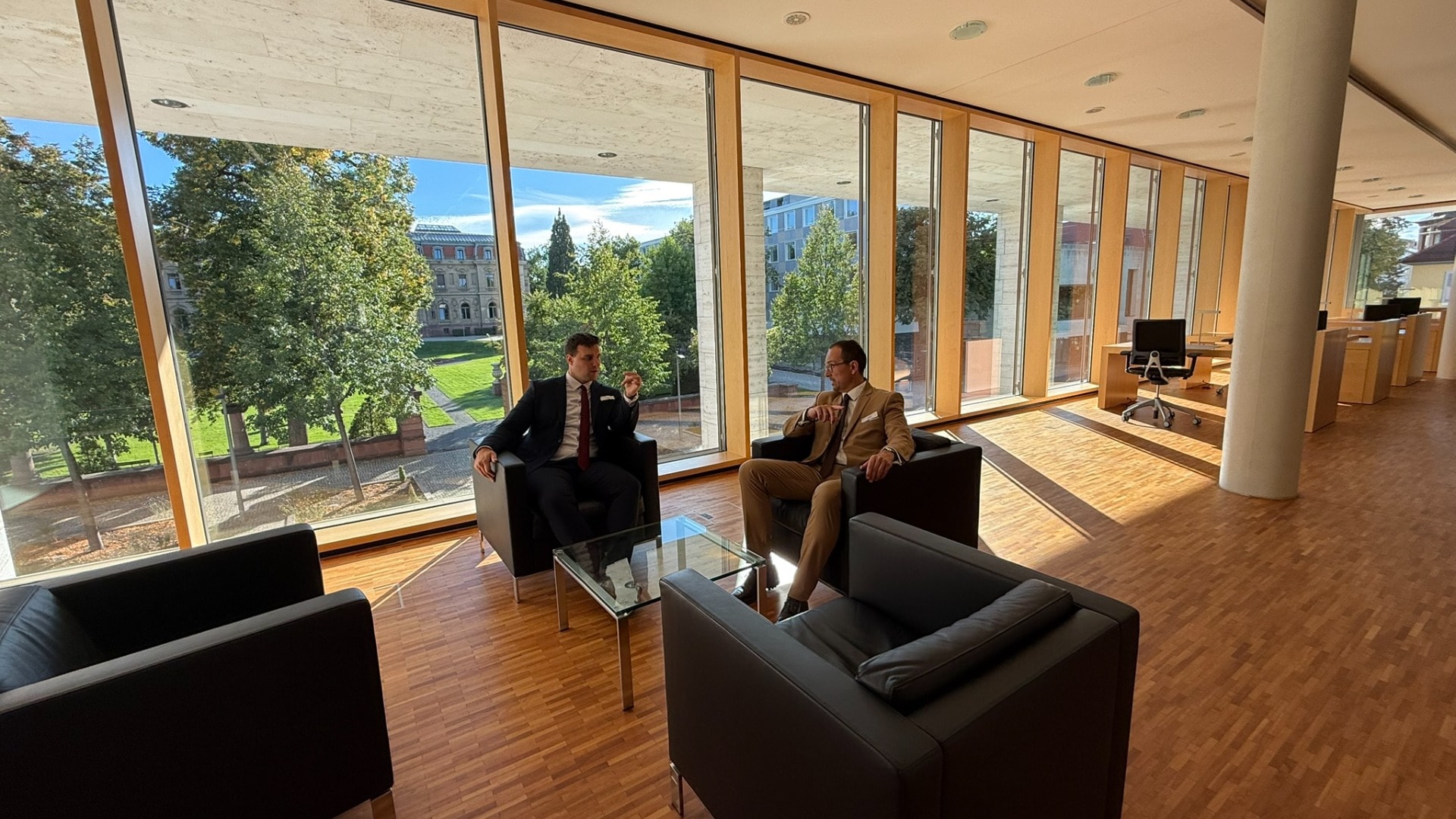
Kristijan Karan, Attorney at Law in Novi Sad, and Slavko Jandrić, Attorney at Law in Banja Luka, during a conversation in the library of Germany’s Federal Court of Justice in Karlsruhe.
The programme continued with a personally guided tour of the Federal Court of Justice, led by Dr Herbert Geisler, a long-standing member of Friends of ERA and a lawyer admitted to practise before the Court since 1994. Dr Geisler spoke first-hand about his thirty-two years of legal practice before the Court and gave us the opportunity to explore its historic premises, modern courtrooms, library and other places of particular historical significance that are not open to every visitor. I sincerely thank him for his time, expert guidance and the generosity with which he shared his wealth of professional experience with us.
I extend my special and sincere thanks to Joanna Kuzaj for the outstanding organisation of the entire visit. Her dedication, meticulous attention to every detail and ability to bring people and institutions together ensured that the day ran seamlessly and was filled with substantive discussions, first-hand experiences and meetings of lasting professional value.
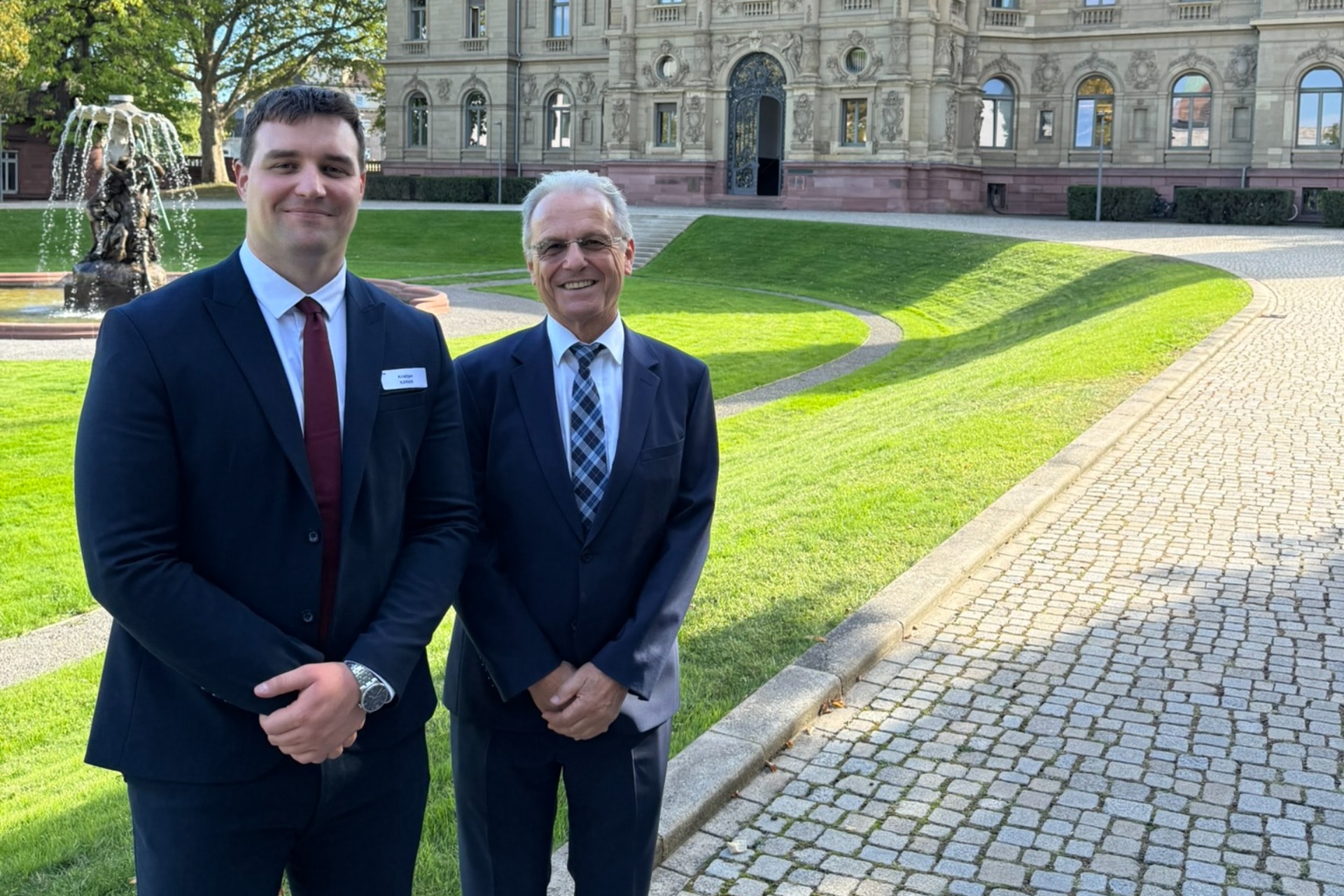
Kristijan Karan, Attorney at Law in Novi Sad, and Dr Herbert Geisler, a lawyer admitted to practise before Germany’s Federal Court of Justice, outside the Court’s seat in Karlsruhe.
My thanks also go to Professor Dr iur. Ulrich Rommelfanger, who for more than a decade has been a driving force and one of the principal architects of the German Chapter of Friends of ERA. His long-standing dedication, vision and work have significantly shaped the chapter’s development and success and made possible programmes that provide members with experiences that cannot be gained at conventional professional events.
I am particularly grateful to Friends of ERA, whose efforts made this visit possible. Friends of ERA is an exceptional European network of legal professionals that not only supports the work of the Academy of European Law (ERA), but also actively connects legal professionals from different countries, promotes the exchange of knowledge and enables its members to engage with the highest standards of European legal practice. Programmes such as this demonstrate the importance of direct professional contacts, open dialogue and a shared commitment to the rule of law in building a genuine European legal community. It is a great honour and pleasure to be a member of this association and to have had the opportunity to participate in a programme of such quality.
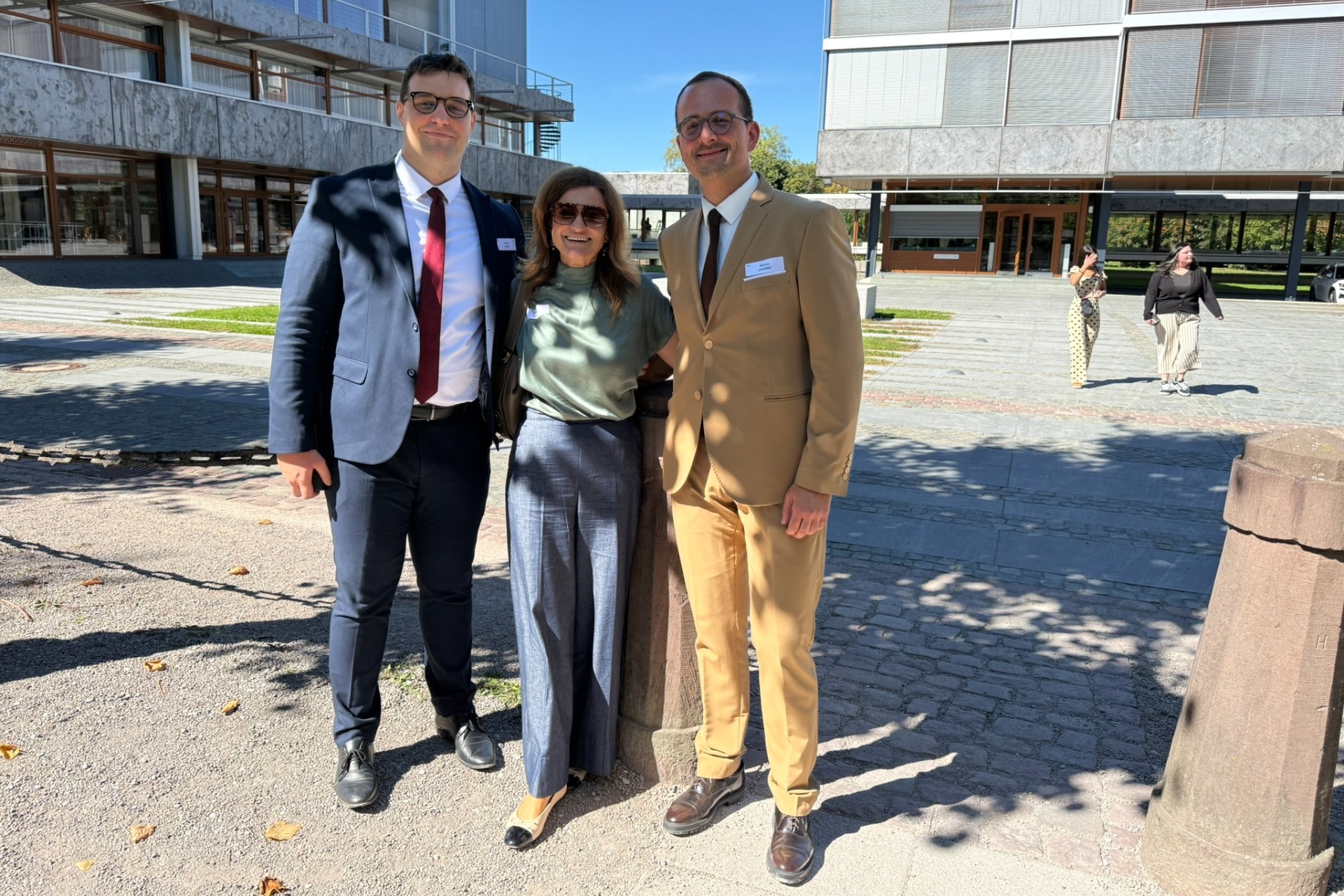
From left to right: Kristijan Karan, Joanna Kuzaj, Friends of ERA Liaison and involved in the Academy of European Law (ERA) Scholarship Programme, and Slavko Jandrić, in front of Germany’s Federal Constitutional Court in Karlsruhe.
For Serbia, as well as for other countries that are developing their legal systems in dialogue with the European legal sphere, it is of great importance that lawyers actively participate in programmes of this kind. First-hand insights into the work of leading European courts, familiarity with different legal cultures and the exchange of experience with colleagues from other jurisdictions contribute to improving the quality of legal services, fostering a better understanding of international and European legal standards and strengthening cross-border cooperation. The knowledge and professional connections gained in this way benefit not only the participants, but also their clients, the legal profession and the broader advancement of the rule of law and legal certainty in our societies.
Author: Kristijan Karan, Attorney-at-Law in Novi Sad, Serbia
Published on: 23. September 2026